1.
Which burrowing Australian marsupial leaves behind droppings shaped like little cubes?

AnswerWombat
NoteScientists think the cubes form inside the gut, where stretchier and stiffer bands of the intestine wall shape the poo into corners.
Host sheet Science Facts That Sound FakeWombats with cube-shaped poo, a day on Venus that outlasts its year, and more true science that sounds made up. A pub quiz for doubters. Round 1 Biology that sounds invented1. Which burrowing Australian marsupial leaves behind droppings shaped like little cubes? AnswerWombat NoteScientists think the cubes form inside the gut, where stretchier and stiffer bands of the intestine wall shape the poo into corners. 2. Which of these sea creatures has three hearts?  AnswerOctopus NoteTwo of its hearts pump blood through the gills, the main heart stops beating while it swims, and its blood is blue. 3. Which of these fruits counts as a berry to a botanist?  AnswerBanana NoteStrawberries and raspberries fail the test: a strawberry's 'seeds' on the outside are actually its true fruits. 4. Which helmet-shaped sea creature with a spiky tail has bright blue blood that is used to test medicines for bacteria? AnswerHorseshoe crab NoteThe colour comes from copper in its blood, where we have iron, and a substance from it detects bacterial toxins in medical kit. 5. The peanut is not a true nut at all; which plant family, home to peas and beans, does it belong to?  AnswerLegumes NotePeanut pods grow underground: after flowering, the plant pushes its developing pods down into the soil. 6. A whole forest of quaking aspens in Utah is actually one single living organism; what is it called?  AnswerPando NoteIts trunks all share one root system and are genetically identical, making it one of the heaviest known organisms on Earth. 7. Which eucalyptus-munching Australian animal has fingerprints that look remarkably like human ones, even under a microscope? AnswerKoala NoteScientists think the swirly ridges evolved separately in humans and this animal, both for a better grip. 8. True or false: an Australian river turtle can take in much of its oxygen through its bottom while underwater.  Answertrue NoteThe Fitzroy River turtle has special pouches near its rear end that absorb oxygen from the water, letting it stay submerged for very long spells. Round 2 Physics and chemistry surprises9. Which silvery metal melts if you simply hold it in the palm of your hand? AnswerGallium NoteA classic prank uses spoons made of it, which melt away when stirred into a hot cup of tea. 10. Which element was spotted in the light of the Sun years before anyone found it on Earth? AnswerHelium NoteIts name comes from the Greek word for the Sun, because that is where it was first detected. 11. A sparkling diamond and the grey graphite in a pencil are made of exactly the same element; which one? AnswerCarbon NoteThe only difference is how the atoms are arranged: locked in a rigid 3D lattice in diamond, stacked in slippery sheets in graphite. 12. True or false: under just the right pressure and temperature, water can exist as ice, liquid and vapour all at once.  Answertrue NoteThis sweet spot is called the triple point, and it is so precise that scientists once used it to define the temperature scale. 13. True or false: on a sunny day the top of the Eiffel Tower leans away from the Sun.  Answertrue NoteThe iron on the sunny side expands more than the shady side, so the top shifts away from the heat by several centimetres. 14. A gloopy mix of cornflour and water that turns solid when you punch it is named after a Dr Seuss book; what is it called? AnswerOobleck NoteIt is a non-Newtonian fluid: stir it slowly and it flows, but hit it hard and it acts like a solid, so people can even run across a pool of it. 15. Which Victorian scientist and lord gave his title to the temperature scale that starts at absolute zero? AnswerLord Kelvin NoteHe was born William Thomson and took his title from the River Kelvin, which flows past the University of Glasgow. 16. Which gas makes up most of the air you are breathing right now?  AnswerNitrogen NoteOxygen is only around a fifth of the air; the gas we actually need is outnumbered several times over. Round 3 Space facts that sound wrong17. On which planet does one spin on its axis take longer than a whole trip around the Sun?  AnswerVenus NoteIt also spins backwards compared with most planets, so there the Sun would rise in the west. 18. Which planet is less dense than water, so it could float in a big enough bath? AnswerSaturn NoteIt is the only planet in our solar system whose average density is lower than water's. 19. Which ice giant planet is tipped so far over that it spins on its side as it orbits the Sun?  AnswerUranus NoteAstronomers think a collision with an Earth-sized object long ago knocked it over. 20. NASA's Curiosity rover photographed a sunset on the Red Planet; what colour was the glow around the setting Sun? AnswerBlue NoteFine Martian dust lets blue light through a little more easily, the opposite of the orange sunsets we get on Earth. 21. A teaspoon of material from which collapsed type of star would outweigh the Great Pyramid of Giza many times over? AnswerNeutron star NoteThese stars pack more mass than the Sun into a ball about the size of a city. 22. Which large moon has lakes and seas filled with liquid methane instead of water? AnswerTitan NoteIt is the only place besides Earth known to have stable bodies of liquid on its surface. 23. True or false: the Sun makes up more than nine tenths of all the mass in our solar system. 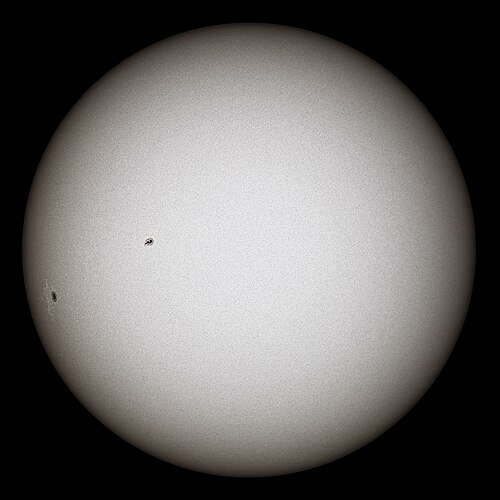 Answertrue NoteIt is almost all of it: the planets, moons, asteroids and comets together are only a tiny crumb left over. 24. Laser beams bounced off mirrors left by Apollo astronauts show which body slowly drifting away from Earth? AnswerThe Moon NoteIt edges away by a few centimetres a year, about as fast as your fingernails grow. Round 4 The human body's odd truths25. Which bone in your neck is the only one in the body not joined to any other bone? AnswerHyoid NoteThis horseshoe-shaped bone is held in place by muscles and ligaments and helps you swallow and speak. 26. True or false: a newborn baby has more bones than an adult. Answertrue NoteMany of a baby's bones fuse together as it grows, including the separate plates of the skull. 27. What is the largest organ of the human body?  AnswerSkin NoteIt accounts for roughly a sixth of your body weight and is thickest on the palms and soles. 28. The same reflex that makes a frightened cat's fur stand on end gives humans what? AnswerGoosebumps NoteIn furry animals the raised hair traps warm air and makes them look bigger to enemies. 29. The stapes, the smallest bone in the human body, is found in which body part? AnswerEar NoteIt is shaped like a tiny stirrup, which is exactly what its Latin name means. 30. What is the hardest substance in the human body? AnswerTooth enamel NoteIt is almost entirely mineral, which makes it hard but also brittle enough to chip. 31. Which internal organ can grow back to full size after surgeons remove a large part of it?  AnswerLiver NoteIt is the only internal organ with this power, which is why living people can donate part of theirs. 32. True or false: astronauts grow slightly taller while living in space.  Answertrue NoteWithout gravity squashing it, the spine stretches out; the extra height disappears soon after landing. Photos: snap wander on Unsplash · Oleksandr Sushko on Unsplash · Kelvin Zyteng on Unsplash · engin akyurt on Unsplash · Meritt Thomas on Unsplash · Martijn Vonk on Unsplash · Giorgio Trovato on Unsplash · Jacob Diehl on Unsplash · Iurii Bannov on Unsplash |