Round 1 Bizarre wars and battles1. In the 1930s, Australian soldiers armed with machine guns waged a 'war' on which large flightless birds raiding farmland? AnswerEmus NoteThe fast, scattering birds proved so hard to hit that the operation was soon called off, with the birds still roaming the wheat fields. 2. The shortest war in recorded history, over in under an hour in the 1890s, was fought between Britain and which island sultanate? AnswerZanzibar NoteIt started because a new sultan took the throne without British approval, and it ended soon after the palace came under fire. 3. Which Italian city beat Bologna in the 1320s 'War of the Bucket', named after a bucket said to be carried off as a trophy? - Modena
- Florence
- Venice
- Parma
AnswerModena NoteDespite the legend, the war did not start over the bucket: it began after Modena captured a Bolognese castle. 4. True or false: the 'Pig War' of the 1850s between the United States and Britain had just one casualty, a pig. 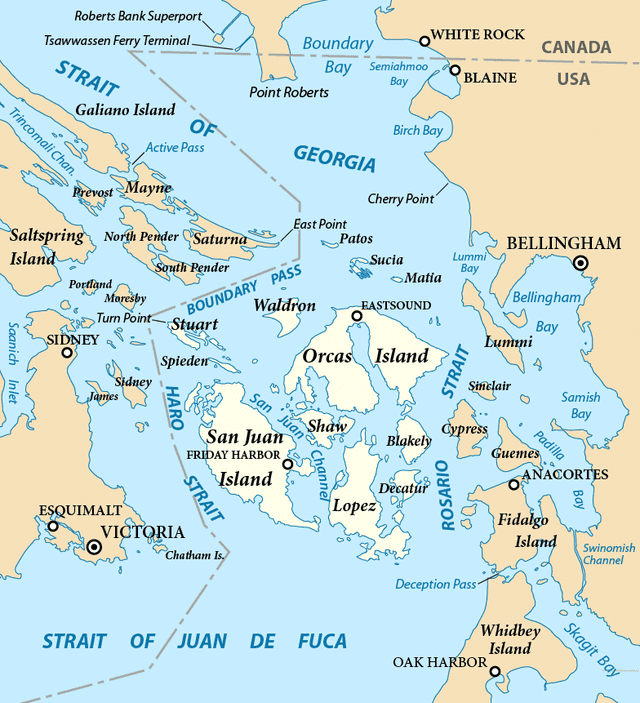 Answertrue NoteThe standoff on San Juan Island began when an American settler shot a pig, owned by a worker of the British Hudson's Bay Company, that kept eating his potatoes. 5. Britain's 20th-century 'Cod Wars' were clashes over fishing rights with which country? - Iceland
- Norway
- Denmark
- Ireland
 AnswerIceland NoteHardly a shot was fired in earnest; instead, coast guard ships cut the nets of British trawlers and vessels rammed each other. 6. The 'War of Jenkins' Ear' was named after a British sea captain whose ear was reportedly cut off by coastguards from which country? AnswerSpain NoteCaptain Robert Jenkins was later brought before the House of Commons, where his story was used to whip up support for war. 7. The 1780s 'Kettle War' got its name because the only shot fired hit a soup kettle; which country's navy fired it? AnswerThe Dutch Republic NoteThe ship that was hit sailed for the Habsburg emperor, who wanted the Dutch-blocked river Scheldt opened to trade. 8. Michigan lost the 1830s 'Toledo War' to which neighbouring state, but got the Upper Peninsula as a consolation prize?  AnswerOhio NoteThe Upper Peninsula was seen as a poor deal at the time, until rich deposits of copper and iron were found there. Round 2 Odd laws and customs9. Russia's Tsar Peter the Great made men pay a special tax for wearing what? AnswerBeards NoteMen who paid were handed a token to carry as proof, stamped with a message that the beard is a useless burden. 10. Roman emperor Vespasian taxed which liquid, collected from public toilets and sold to tanners and launderers?  AnswerUrine NoteWhen his son complained, Vespasian is said to have held a coin under his nose and asked whether it smelled, giving us the saying 'money does not stink'. 11. In the 1500s, French lawyer Bartholomé Chassenée became famous for defending which pests in a church court in Autun?  AnswerRats NoteHe argued that his clients had failed to turn up in court because they feared for their lives on the way, and won them more time. 12. In the 1640s, England's Puritan-led Parliament banned celebrations of which holiday? AnswerChristmas NoteEaster and Whitsun were outlawed at the same time, as Puritans saw such feasts as Catholic inventions. 13. Wealthy Georgian landowners sometimes paid a man to live alone in a garden grotto, as an ornamental what? 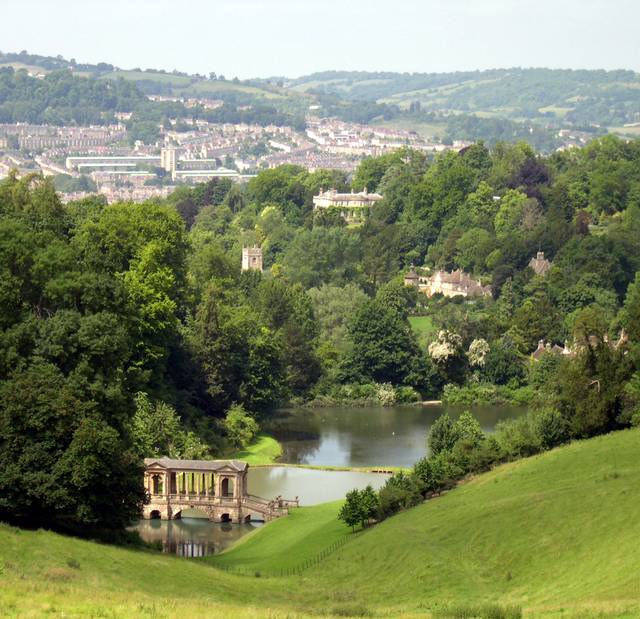 AnswerHermit NoteOne hermit, hired at Painshill under strict conditions for a seven-year term, was sacked after three weeks when he was found in the local pub. 14. Ancient Athenians could exile a politician by scratching his name on pottery shards, giving us which English word?  AnswerOstracism NoteThe shards were called ostraka, and Plutarch tells of a voter who could not write asking Aristides himself, unaware who he was, to scratch 'Aristides' for him. 15. Famous incidents in Prague, where officials were thrown out of windows, gave us which English word? 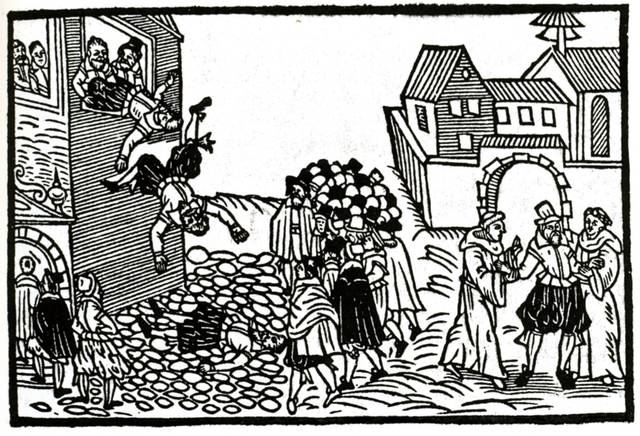 AnswerDefenestration NoteThe most famous one, in the 1610s, helped trigger the Thirty Years' War, and all three men thrown out survived the long fall. 16. True or false: some medieval Christians ate barnacle geese during Lent, believing the birds grew from barnacles rather than eggs. 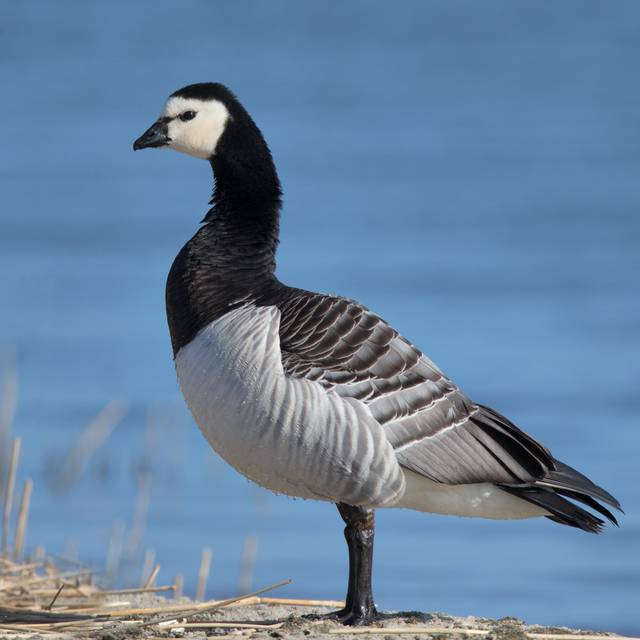 Answertrue NoteBecause the geese were not thought to be born of flesh, they could pass as fasting food, until a pope banned the practice in the 1200s. 17. In the late 1910s, a burst storage tank flooded Boston's North End with a wave of which sticky syrup?  AnswerMolasses NoteResidents have long claimed that on hot summer days, the neighbourhood still smelled sweetly of the syrup decades later. 18. In the 1810s, a burst vat at a London brewery sent a flood of what through the streets of St Giles? AnswerBeer NoteThe brewery was taken to court, but the disaster was ruled an act of God, so the brewery did not have to pay any compensation. 19. In the 1510s, dozens of people in which city danced for days in the streets, an event known as the dancing plague? AnswerStrasbourg NotePhysicians prescribed that the dancers should dance themselves free of it, and musicians were reportedly brought in, which only made things worse. 20. The 'Great Stink' of the 1850s finally pushed Parliament to fund London's modern sewers; which river caused it? 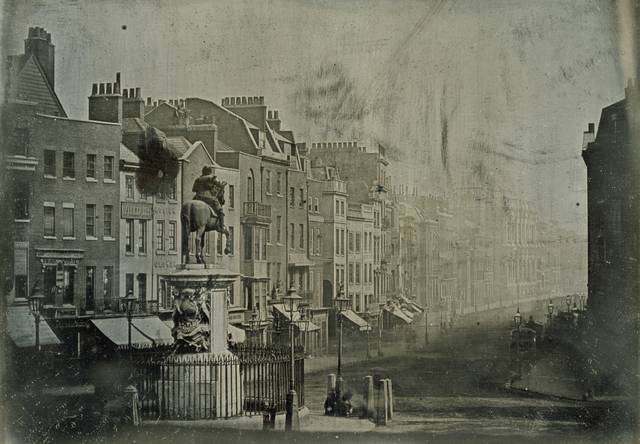 AnswerThe Thames NoteCurtains soaked in chloride of lime were hung in the Houses of Parliament to try to keep out the smell. 21. In the early 1900s, a space rock exploded in the air above which remote region of Russia, flattening a vast area of forest? AnswerSiberia NoteThe blast wave felled the trees in a radial pattern shaped like a pair of butterfly wings. 22. A laughter epidemic that closed schools in the 1960s broke out in Tanganyika, part of which present-day country? - Tanzania
- Kenya
- Uganda
- Malawi
AnswerTanzania NoteIt began at a girls' boarding school and spread to nearby villages, and the outbreak dragged on for months. 23. Which Indonesian volcano's huge eruption caused Europe's 'Year Without a Summer' in the 1810s? - Tambora
- Krakatoa
- Merapi
- Pinatubo
AnswerTambora NoteThe rainy weather kept Mary Shelley and her friends indoors at a Swiss villa, where a ghost-story contest led her to write Frankenstein. 24. True or false: an official inquiry proved that Mrs O'Leary's cow started the Great Chicago Fire.  Answerfalse NoteThe story of the lantern-kicking cow was made up by a reporter, who admitted it decades later. Round 4 Unlikely coincidences25. Founding fathers John Adams and Thomas Jefferson died on the same day in the 1820s; which day was it? - Independence Day
- Thanksgiving
- Christmas Day
- New Year's Day
AnswerIndependence Day NoteAdams's last words were reportedly 'Thomas Jefferson survives', but Jefferson had in fact died a few hours earlier. 26. Mark Twain was born during a visit of which famous comet and died, just as he had predicted, on its next return? AnswerHalley's Comet NoteHe joked that he had come in with the comet and expected to go out with it, as the two of them were 'unaccountable freaks'. 27. An 1890s novella called Futility describes an 'unsinkable' ship named Titan hitting an iceberg; which real ship did it foreshadow?  AnswerTitanic NoteMorgan Robertson wrote it more than a decade before the real sinking, and his fictional ship also ran short of lifeboats. 28. Abraham Lincoln was born on exactly the same day as which British naturalist?  AnswerCharles Darwin NoteBoth were born in February 1809, one in a Kentucky log cabin and the other in a comfortable house in Shrewsbury. 29. Napoleon was born in the same year as which commander, who later defeated him at Waterloo? - The Duke of Wellington
- Lord Nelson
- Gebhard von Blücher
- The Duke of Marlborough
 AnswerThe Duke of Wellington NoteWellington was born in Ireland, while Napoleon was born on Corsica, which had only just become French. 30. True or false: William Shakespeare and Miguel de Cervantes died on the very same day. Answerfalse NoteTheir deaths share the same date on paper, but Spain used the new Gregorian calendar and England the old Julian one, so they died days apart. 31. Two unrelated comic strips with the same title launched in Britain and America on the same day in the early 1950s; what was it? AnswerDennis the Menace NoteThe two strips are unrelated, and each is subtly renamed in the other's home country to avoid confusion. 32. Abraham Lincoln's son Robert was once saved from falling under a train by the brother of which future assassin? AnswerJohn Wilkes Booth NoteHis rescuer was the actor Edwin Booth, and the near miss happened on a crowded train platform in Jersey City. |